By Lilian Ezejiegu
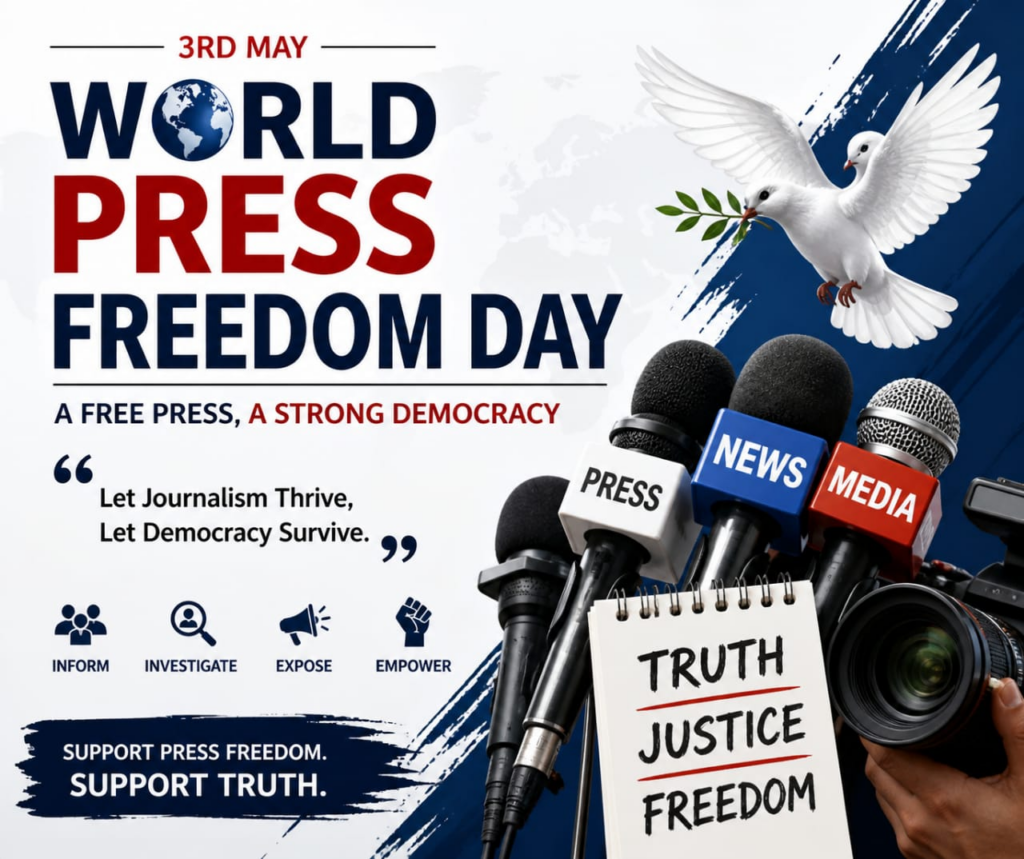
Every year on May 3, the global community marks World Press Freedom Day—a day set aside to celebrate the fundamental principles of press freedom, assess the state of media independence, and honor journalists who have paid the ultimate price in the line of duty.
Established by the United Nations General Assembly in 1993, following a recommendation by UNESCO, the day serves as a reminder that a free press is not a luxury, but a necessity for any thriving democracy.
The theme for 2026, “Shaping a Future at Peace: Promoting Press Freedom for Human Rights, Development, and Security,” underscores the vital role of the media in fostering peace and stability. In a world increasingly shaped by digital transformation, misinformation, and security challenges, the responsibility of journalists has grown more complex and more critical.
A free and independent press acts as the watchdog of society. It informs citizens, holds leaders accountable, and amplifies the voices of the marginalized. Without it, governance becomes opaque, corruption thrives, and the public is left in the dark. Press freedom, therefore, is closely tied to the right to information—an essential pillar for meaningful citizen participation in governance.
However, across many parts of the world, journalists continue to face intimidation, harassment, and even violence. Laws meant to protect national security are sometimes misused to silence dissenting voices, while economic pressures and ownership influence can compromise editorial independence.
These challenges call for renewed commitment from governments, media organizations, and civil society to uphold ethical standards and protect the rights of media practitioners.
In Nigeria and at the state level, the observance of this day offers an opportunity for reflection and action. Governments must strengthen frameworks that guarantee access to information and ensure that policies are communicated transparently. Media unions and professional bodies also have a role to play by promoting responsible journalism, capacity building, and unity among practitioners.
Ultimately, press freedom is not only about journalists—it is about the public’s right to know. When the media thrives in an environment of freedom and responsibility, society benefits from informed decision-making, increased accountability, and sustainable development.
As we commemorate this year’s World Press Freedom Day, let it serve as a call to action for all stakeholders to protect the integrity of the media and to uphold truth as a cornerstone of peace, progress, and democracy.
Lilian is of the Ministry of Information, Anambra State