By Chidinma Ajemba
Mental health is an essential part of overall well-being, yet it is often overlooked in conversations about disability. While disability itself does not automatically lead to poor mental health, many persons with disabilities face emotional challenges because of the barriers and attitudes they encounter every day.
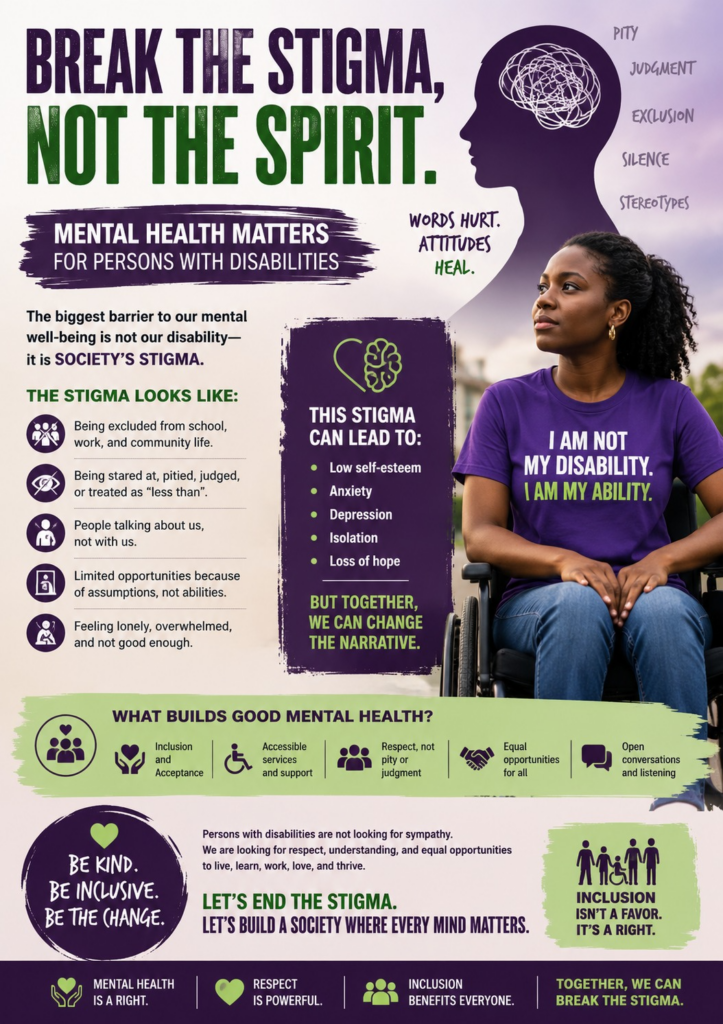
One of the greatest threats to the mental health of persons with disabilities is not the disability itself—it is society’s stigma. Too often, people with disabilities grow up hearing they were “less than…,” “incapable,” or “a burden.” They are excluded from schools, workplaces, places of worship, social activities, and even family decisions because of assumptions about what they can or cannot do. These daily experiences of discrimination, rejection, and isolation can gradually lead to low self-esteem, anxiety, depression, loneliness, and emotional distress.
Imagine having to constantly prove your worth simply because you use a wheelchair, are blind, deaf, or have an intellectual or psychosocial disability. Imagine being stared at or pitied instead of respected, or denied opportunities because people see your disability before they see your potential. These experiences leave invisible wounds that are just as real as physical barriers.
The truth is that the greatest obstacle is often not the impairment but the barriers created by society, stigma, inaccessible environments, unemployment, poverty, and limited access to quality healthcare place enormous pressure on the mental well-being of persons with disabilities. No one should have to fight for acceptance while also struggling to protect their mental health.
Supporting the mental health of persons with disabilities requires more than medical care. It demands inclusive communities where everyone is respected, valued, and given equal opportunities to participate. It means ensuring accessible mental health services, disability-aware healthcare professionals, supportive families, inclusive schools and workplaces, and strong community networks. It also requires us to challenge the harmful belief that seeking mental health support is a sign of weakness.
As we advocate for disability rights, we must remember that true inclusion goes beyond ramps and accessible buildings. It also means creating environments where persons with disabilities feel safe, accepted, heard, and empowered to thrive emotionally and psychologically.
It is time to change the narratives. Persons living with disabilities do not need pity or sympathy—they need respect, acceptance, accessibility, and equal opportunities. By challenging stigma and embracing inclusion, we build a society where every person can live with dignity, confidence, hope, and good mental health.
Mental health is a right. Inclusion is a responsibility. Let’s end the stigma because every person deserves to be seen, heard, respected, valued, and supported.
*Chidinma Ajemba is of the Ministry of Information and Value Reformation Anambra State