By Chizoba Njaka
The Anambra State Government under Governor Chukwuma Soludo has repositioned environmental sanitation from a periodic exercise into a continuous civic responsibility aimed at promoting cleaner communities, improving public health and strengthening environmental resilience across the state.
The administration’s approach is anchored on the “Sustainable Clean and Green Anambra State” campaign, launched in 2023, which focuses on cleanliness, proper waste management, drainage maintenance, flood prevention and the preservation of public spaces.
Rather than restricting sanitation activities to the traditional monthly exercise, the government has encouraged residents, communities, markets and government agencies to embrace environmental cleanliness as a daily responsibility.

The initiative represents a shift from the conventional approach to environmental sanitation in Nigeria, which became widely associated with monthly sanitation exercises during the military era, particularly following the introduction of the War Against Indiscipline in 1984.
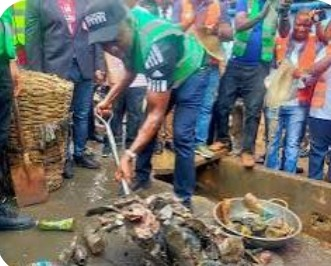
Under the Soludo administration, greater emphasis is being placed on everyday hygiene, proper disposal of refuse and the regular clearing and maintenance of gutters, drainage channels and waterways. The government has also linked environmental sanitation to the state’s efforts to address flooding and erosion. According to the administration, indiscriminate dumping of refuse and blocked drainage channels can worsen flooding and contribute to environmental degradation during periods of heavy rainfall.
Consequently, desilting of drains and waterways and the maintenance of cleaner drainage channels have become important components of the state’s environmental management strategy. The sanitation campaign is also being implemented as part of the government’s wider urban renewal programme. Cleaner streets, improved waste collection and better-managed public facilities, including abattoirs, are being promoted as part of the administration’s vision of a smart, livable and economically attractive Anambra.
The Anambra State Waste Management Authority (ASWAMA) remains central to the implementation of the programme. The government has continued to stress that effective waste management requires cooperation between public institutions and residents. While government agencies are expected to provide waste collection services and enforce environmental regulations, residents are encouraged to take ownership of their surroundings by keeping their communities clean and disposing of waste appropriately.
The campaign has received mixed reactions, although many residents, market leaders and community stakeholders have reportedly welcomed improvements in the appearance of major cities such as Awka and Onitsha.
Regular awareness campaigns and dawn sweeping exercises have also been credited by supporters with improving environmental discipline in some communities. However, concerns have been raised over strict enforcement and occasional delays in waste collection. These concerns have highlighted the need for effective coordination between enforcement and the provision of reliable waste management services.
Supporters of the administration’s policy maintain that improved sanitation could provide significant public health benefits by reducing breeding grounds for mosquitoes and rodents and helping to minimise the risks associated with diseases such as malaria, cholera and typhoid. In a state confronted by flooding and erosion challenges, proper sanitation is also being viewed as an important component of environmental protection and climate resilience. Observers say the broader significance of the Soludo administration’s sanitation policy lies in its attempt to combine environmental cleanliness, public order, climate action and urban development.
By encouraging residents to see sanitation as an everyday responsibility rather than a one-day monthly activity, the government is seeking to establish environmental habits that can endure beyond individual campaigns and administrations. The initiative therefore reflects a broader development philosophy in which a clean environment is linked not only to public health but also to human dignity, investment confidence and sustainable urban development.
Chizoba Njaka is of the Ministry of Information and Value Reformation, Anambra State
#Ministryofinformationandvaluareformation
#Anambraisrising
#Informationiskey
#Solutionishere
#Solutioncontinues