By Doris Onyekachi
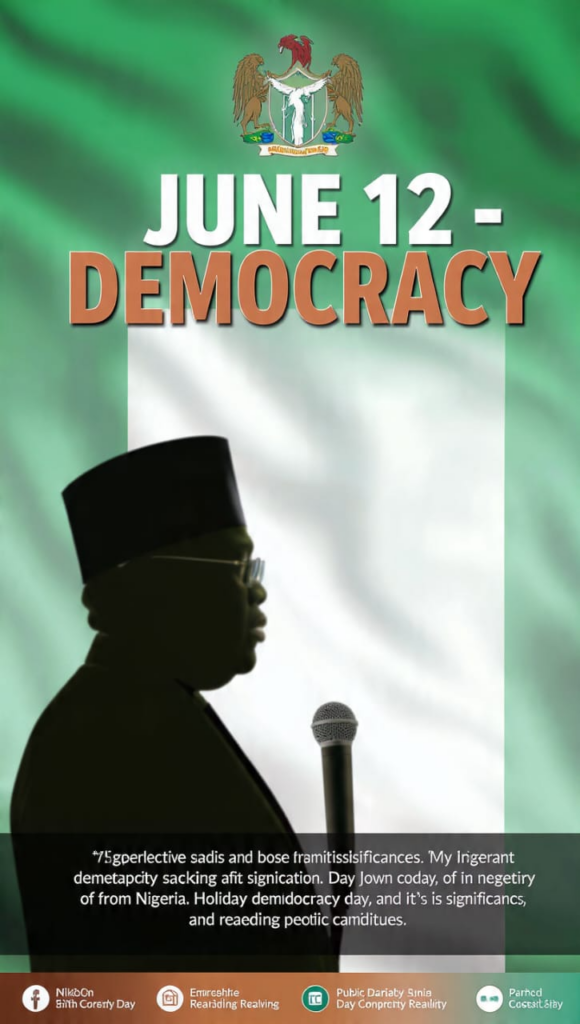
Nigeria observes Democracy Day annually on June 12 to commemorate the historic 1993 presidential election won by Chief Moshood Kashimawo Olawale (MKO) Abiola and to honour the sacrifices made in the struggle for democratic governance.
The June 12, 1993 election is widely regarded as the freest and fairest in Nigeria’s history. However, its annulment by the military government sparked widespread protests and intensified the demand for civilian rule. MKO Abiola, who was widely believed to have won the election, was subsequently detained and later died in custody in 1998 while pursuing the validation of his mandate.
Nigeria eventually returned to democratic governance on May 29, 1999, marking the end of prolonged military rule.
In 2018, former President Muhammadu Buhari officially moved the celebration of Democracy Day from May 29 to June 12 in recognition of the significance of the 1993 election. He also conferred the national honour of Grand Commander of the Federal Republic (GCFR) on MKO Abiola posthumously. Since 2019, June 12 has been observed as a national public holiday.
As Nigerians mark Democracy Day in 2026, the occasion serves as an opportunity to reflect on the nation’s democratic journey, assess its progress, and renew commitment to democratic values. It also provides a platform for citizens to demand greater accountability, transparency, improved security, job creation, and better infrastructure from elected leaders.
Democracy Day remains a powerful reminder of the importance of the electoral process, the sacrifices of pro democracy advocates, and the collective responsibility of citizens and leaders to strengthen democratic institutions.
For Nigerians, June 12 is not only a day of remembrance but also a call to action to ensure that democracy continues to deliver meaningful benefits to the people.
Doris Onyekachi is of the Ministry of Information, Anambra State