
By Lilian Ezejiegu
Food is essential to survival, but what we eat also affects our health, environment and animal welfare. World Vegan Day offers a chance to examine the relationship between food choices and responsible living.
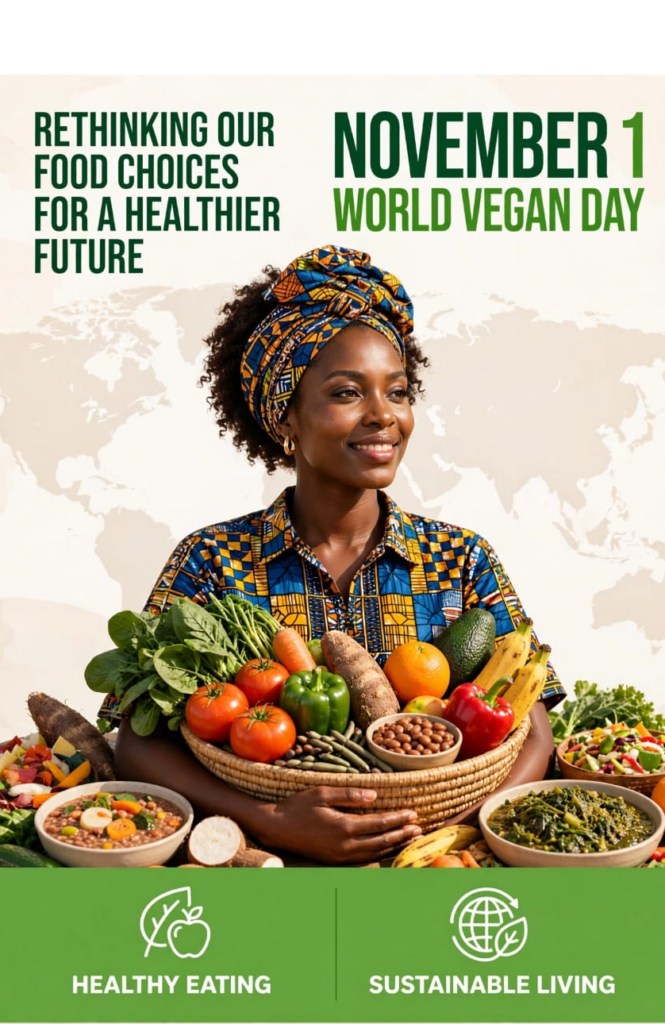
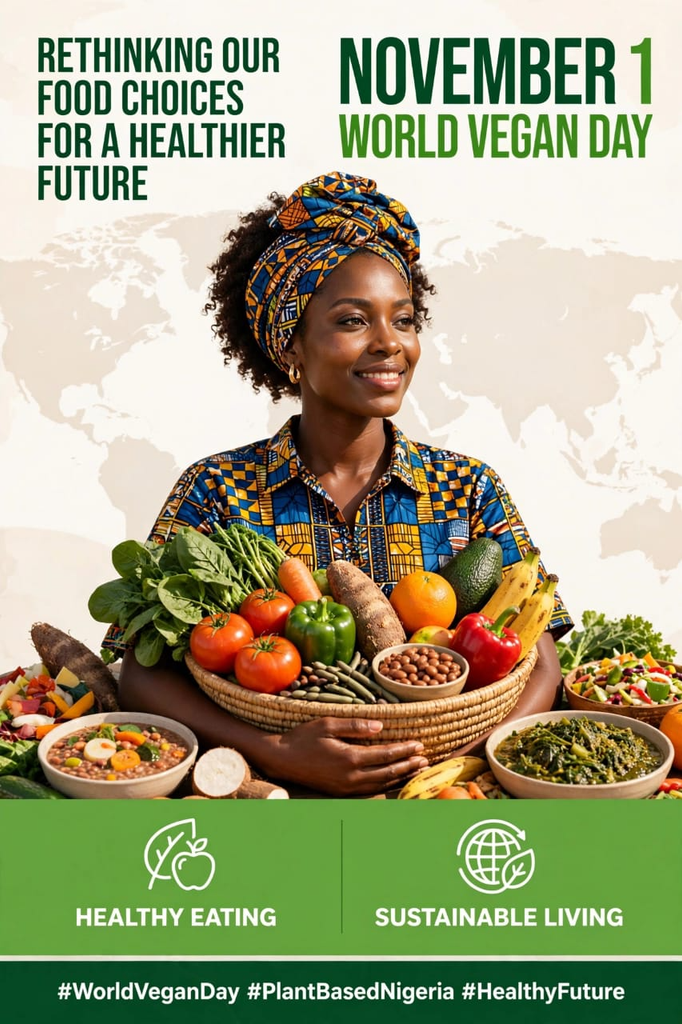
Observed every November 1, World Vegan Day marks the start of World Vegan Month and raises awareness about veganism is a lifestyle that avoids animal-derived products, especially in food.
Vegan diets exclude meat, fish, eggs, milk and other animal products. Instead, they rely on beans, vegetables, fruits, grains, nuts and seeds — foods familiar to many Nigerian households.
In Nigeria, beans, yam, rice, vegetables and maize are widely consumed. The day is an opportunity to appreciate the nutritional value of our locally available produce.
A well-planned vegan diet can provide fibre, vitamins and minerals, but careful planning is important. Particular attention should be given to vitamin B12, iron, calcium, iodine, vitamin D and protein.
Beyond nutrition, plant-based eating is linked to environmental sustainability. Diets with more plant-based foods can reduce pressure on land and natural resources, especially when combined with reduced food waste.
World Vegan Day also highlights animal welfare and encourages reflection on how animals are treated in food production. For advocates, plant-based choices express concern for animals.
The message is not that everyone must eat the same way. It is a chance to learn about nutrition, appreciate local foods, reduce waste and make informed decisions for personal well-being.
Ultimately, a healthier future begins with informed choices. By valuing nutritious foods and supporting sustainable farming, we can build a food system that serves present and future generations.
Lilian is of the Ministry of Information and Value Reformation, Anambra State.
#WorldVeganDay #HealthyEating #SustainableLiving