By Lilian Ezejiegu
A clean environment begins with responsible sanitation practices, and access to safe toilets remains one of the basic requirements for a healthy, dignified and productive society.
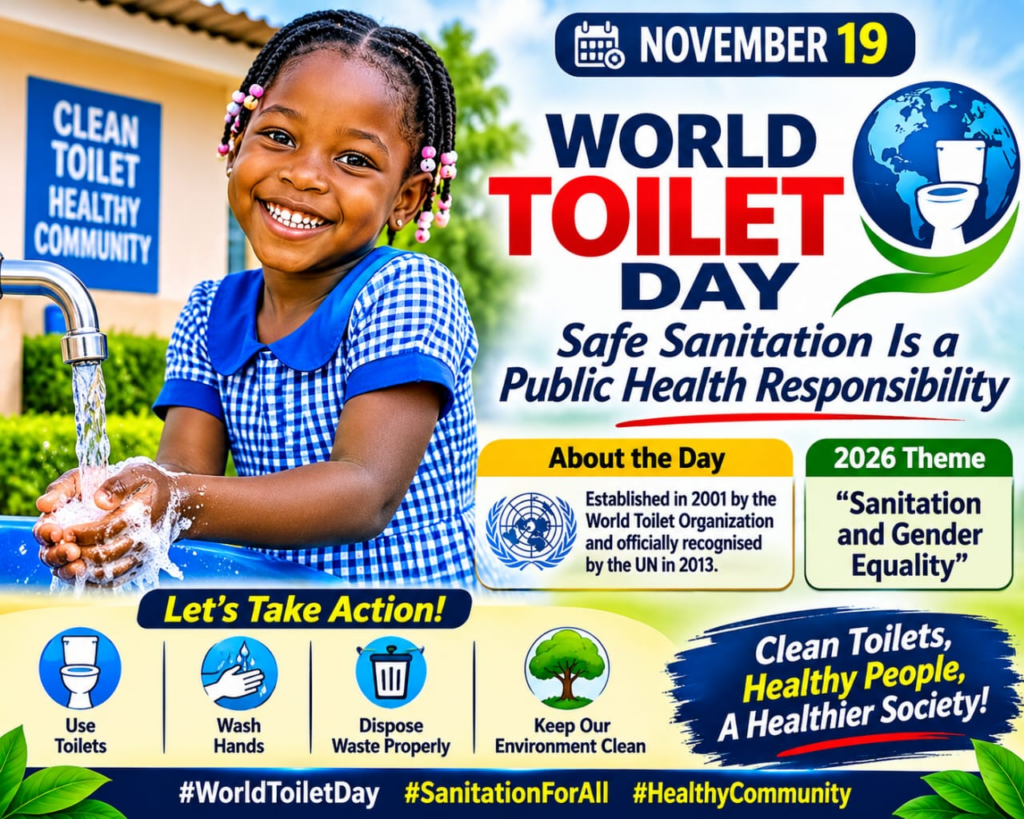
World Toilet Day, observed annually on November 19, raises awareness about the global sanitation crisis and the urgent need to provide safe and accessible sanitation facilities for everyone.
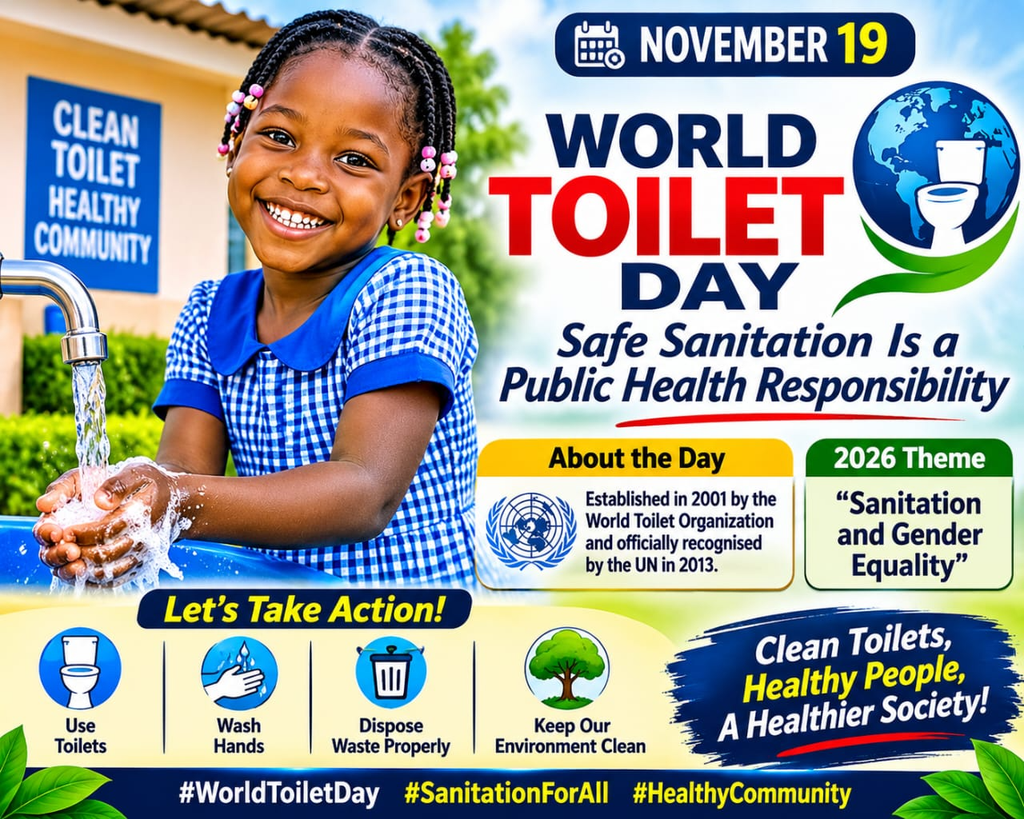
The observance was established in 2001 by the World Toilet Organization, founded by Singaporean sanitation advocate Jack Sim. It received official United Nations recognition in 2013 following a resolution sponsored by Singapore and supported by 122 countries.
The 2026 theme is “Sanitation and Gender Equality,” highlighting how safe toilets, clean water, soap and appropriate hygiene facilities protect women and girls while promoting dignity and equal opportunities.
Poor sanitation contributes to the spread of diseases, environmental pollution and the contamination of water sources. Inadequate toilet facilities in schools and public spaces also create additional difficulties for women, girls and vulnerable populations.
In Nigeria, the challenge calls for sustained investment in public toilets, proper waste disposal, drainage maintenance, environmental sanitation and public education. Communities must also discourage open defecation and indiscriminate waste disposal.
For Anambra State, maintaining clean surroundings requires cooperation between government, residents, market associations, schools, businesses and community leaders. Environmental responsibility must become part of everyday life.
As the world commemorates World Toilet Day, individuals and institutions must recognize that sanitation is not a luxury but a necessity for public health, human dignity and sustainable development.
Lilian is of the Ministry of Information and Value Reformation, Anambra State.
#WorldToiletDay #CleanEnvironment #SanitationForAll