By Obiageli Nwankwo
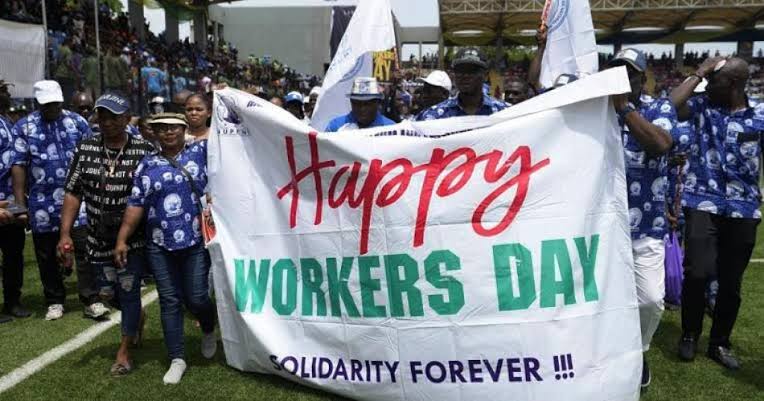
Every May 1, Workers’ Day is marked with fanfare across Anambra State—parades, speeches, and familiar promises. Yet, beneath the ceremony lies an uncomfortable truth: the celebration risks becoming a ritual rather than a catalyst for real change.
Traditionally, Workers’ Day in Anambra has followed a predictable script—colourful rallies, union displays, and government assurances of improved welfare. In recent years, there has been a noticeable shift toward integrating health campaigns, financial literacy, and post-retirement planning into the programme. On paper, this signals progress. In practice, however, the deeper goal of institutionalising Workers’ Day as a tool for measurable reform remains far from achieved.
The intention is clear. Workers’ Day is meant to serve as a benchmark for evaluating welfare, reinforcing professionalism, and strengthening labour-government dialogue. It is supposed to go beyond symbolism, becoming a governance instrument that drives productivity and accountability within the civil service. But that ambition is being undermined by a persistent gap between policy and practice.
The uncomfortable reality is that many of the issues repeatedly highlighted during May Day speeches—lateness, absenteeism, and weak commitment to duty—remain unresolved. Year after year, these concerns resurface, suggesting that the celebration has not yet translated into sustained behavioural change within the workforce. A reform message that is not reflected in daily conduct loses its credibility.
At the same time, it would be unfair to place the burden solely on workers. Economic pressures, rising living costs, and concerns over wages and welfare continue to affect morale. A workforce struggling to meet basic needs cannot be expected to deliver optimal productivity. This creates a cycle where low morale feeds poor performance, which in turn weakens the case for improved welfare.
This is where the real challenge lies. Institutionalising Workers’ Day in Anambra requires more than annual speeches and symbolic initiatives. It demands a system where commitments made on May 1 are tracked, implemented, and evaluated throughout the year. Without that continuity, the celebration becomes little more than a public relations exercise.
For the state government, the task is to match rhetoric with action—ensuring that policies on welfare, training, and career development are not only announced but executed. For labour unions, the responsibility goes beyond advocacy; it includes holding both government and workers accountable. And for workers themselves, professionalism must move from a talking point to a daily standard.
Workers’ Day should be a mirror, not a mask—a moment to reflect honestly on the state of the workforce and take decisive steps forward. Until Anambra closes the gap between intention and implementation, May Day will continue to highlight not just the dignity of labour, but the distance still to be travelled in truly upholding it.
Obiageli is of the Ministry of Information, Anambra State