By Chizoba Njaka
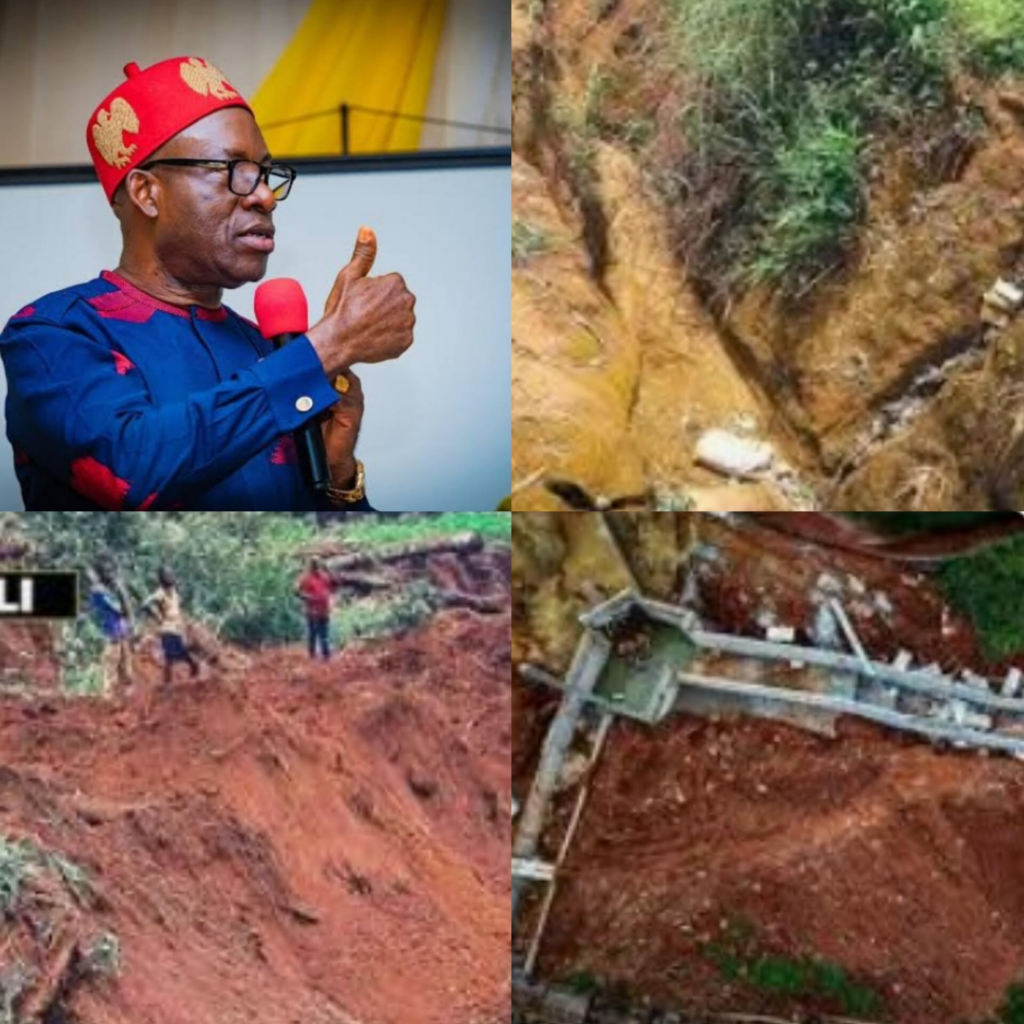
Governor Chukwuma Soludo’s administration has intensified efforts to tackle gully erosion, flooding and environmental degradation across Anambra State, committing billions of naira to reclamation projects, flood control and preventive infrastructure.
Erosion, which occurs when water, wind or ice wears away and carries soil and rock from one location to another, can cause significant environmental and economic damage when accelerated. Its effects include the loss of fertile topsoil, reduced agricultural productivity, water pollution, flooding, destruction of roads and buildings, and the loss of natural habitats.
In Anambra, Governor Soludo has described gully erosion and flooding as the state’s number one existential threat, prompting the administration to adopt a combination of emergency interventions, long-term infrastructure and stricter environmental regulations. The administration has approved and disbursed billions of naira across several budget cycles for erosion reclamation and flood-control projects in communities including Umunze, Umuchu, Oba and Awka.
In June 2025, the state executive council approved contracts worth over N9.6 billion for erosion control and road rehabilitation, including a N3.5 billion Umunze–Umuchu erosion reclamation, flood control and road project. Additional approvals brought the total to about N10.4 billion for erosion, flood management and critical roads across the state.
It has also adopted resilient construction techniques, including stone-base and cement stabilisation, on roads to reduce surface runoff and prevent water from creating new gullies. Many of the new roads are being built with 6-inch stone-base and cement stabilisation, a costlier method designed to last 20 years and reduce runoff that feeds gullies.
Beyond state-funded interventions, the government has partnered with the Federal Ministry of Environment and other agencies to address severe erosion flashpoints. During President Tinubu’s 2025 state visit, he pledged federal support to tackle Anambra’s erosion crisis, acknowledging that the scale of the problem exceeds the state’s fiscal capacity. Additional control works have been secured and executed at locations such as Etitinabo in Anaocha Local Government Area.
The administration declared a state of emergency on environmental degradation, with measures targeting illegal sand mining and the obstruction of natural waterways. In 2026, the governor ordered statewide desilting of drainages and a sanitation crackdown from July, warning that sand mining and waste dumping are accelerating erosion and flooding.
As part of efforts to prevent erosion rather than merely respond to it, the state introduced an environmental code requiring new buildings to provide water-catchment pits to help manage heavy surface runoff. The government further made some state-funded erosion interventions conditional on community compliance with preventive measures, including clearing local drainage channels and establishing community environmental watchdog committees.
Anambra is estimated to have more than 1,000 active erosion sites, with some reports saying about 70 percent of the state’s landmass is at risk. While the Soludo administration has inspected, awarded contracts for, or commenced intervention measures at numerous locations, there is no publicly available exhaustive numerical list covering every active site.
Among locations that have received or been selected for interventions are Uga, Ufuma and Akabor in Nnewi, where dedicated state-led remedial works have been targeted. Reports reference erosion control and road projects in the Nnewi–Ekwulobia–Uga corridor, consistent with the administration’s focus on the area.
At Owelle Aja in Obosi, erosion control works have reportedly reached between 70 and 80 per cent completion, according to the governor. An erosion control and reclamation project at Umuenechi in Agulu Awka was executed through ANSEWCCA and subsequently handed over to the community and Paul University.
Interventions have also been approved and executed around Ekwueme Square in Awka, while contracts have been awarded to address gullies threatening the Government House and State House of Assembly. The executive council approved three contracts specifically to tackle gullies threatening these core government sites, with named contractors and timelines.
Following severe road damage along the Oba axis of the Onitsha-Owerri Expressway, emergency and remedial measures were also deployed to address the erosion-related threat. In Oba, residents have warned that over 20 buildings are at imminent risk from an expanding gully linked to poor drainage along the highway, underscoring the urgency of state interventions.
Other locations covered by major erosion-control approvals and interventions include Ojoto, Abidi, Umuoji, Nnewi, Nkpor, Enugwu-Ukwu and Ire Obosi. These communities appear in official “legacy projects” lists and media reports as sites of erosion control, road and flood-control interventions.
The 2026 budget presented by Soludo allocates about N757.9 billion in total, with 79 percent as capital expenditure, under which erosion control, roads and flood management compete with other infrastructure priorities. Despite the large capital share, analyses note that the direct agriculture and environment budget lines are relatively small, suggesting the state relies heavily on partnerships, phased implementation and off-budget projects to deliver its erosion and farm support agenda.
The administration’s approach reflects a shift from relying solely on emergency reclamation to combining infrastructure development, environmental regulation and community participation in preventing the recurrence and spread of erosion. If sustained, the measures are expected to protect agricultural land, roads, homes and public infrastructure while reducing the environmental and economic burden associated with erosion and flooding across the state. For rural Anambra, the success of the strategy will ultimately depend not only on the scale of government interventions but also on their accessibility, continuity and ability to translate into improved household incomes and living standards.
Chizoba Njaka is of the Ministry of Information and Value Reformation, Anambra State
#Ministryofinformationandvaluareformation
#Anambraisrising
#Informationiskey
#Solutionishere
#Solutioncontinues