
By Doris Onyekachi
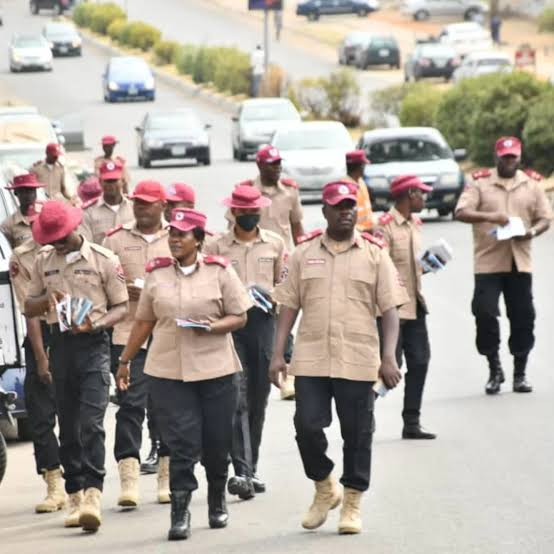
The Federal Road Safety Corps (FRSC) has rolled out several reforms to curb Nigeria’s recurring tanker explosions. The focus is shifting from just rescue to prevention, with Corps Marshal Shehu Mohammed pushing a “multisectoral” approach.
The Key FRSC reforms underway are as follows:
“Safe to Load” policy at depots: FRSC personnel are now deployed at fuel depots nationwide to inspect tankers before loading. Only trucks that meet minimum safety standards – functional brakes, tyres, safety valves – get cleared to load petroleum products.
Mandatory anti-spill locks / safety valves: Field Commanders have been directed to enforce installation of leak-proof appliances and anti-spill locks on tankers. The idea: if a tanker falls, fuel shouldn’t spill and ignite. Enugu Governor Peter Mbah also called on FRSC to enforce this nationwide after the Jan 2025 Ugwu-Onyeama explosion that killed 18.
Onboard cameras for real-time driver monitoring: FRSC is working with the National Association of Road Transport Owners to install onboard cameras on tankers. This allows continuous monitoring of driver behaviour to stop speeding, fatigue, and unsafe practices.
Others are Stakeholder engagement & training: Corps Marshal Mohammed met Petroleum Tanker Drivers’ Union leaders to push training/retraining of drivers and compliance with haulage safety standards.
Multi-agency summit: FRSC convened transport unions and safety agencies in Jan 2025 to develop a “holistic solution” because tanker crashes involve drivers, owners, vehicle integrity, and loading procedures.

Fire Service partnership: Joint enforcement with Federal Fire Service on anti-spill locks, vehicle inspections, and driver evaluations.
RTSSS and pre-loading checks: Under the Road Transport Safety Standardisation Scheme, no petrol/diesel/gas truck can be loaded without FRSC safety clearance. Operators with 5+ vehicles are monitored, with regular inspections and driver training.
Push for state-level enforcement: FRSC is urging states to step up their own truck movement regulations. Some states like FCT restrict articulated vehicles 3 p.m.–10 p.m. to cut crash rates. FRSC says it handles safety while states set movement hours.
The urgency for this is the alarming death toll, 555 people killed in tanker explosions over 5 years; 118 deaths in 2023, 85 in 2024, and 7 explosions in Jan 2025 alone.
Many fatalities happen when crowds rush to scoop spilled fuel, as in the Jan 18, 2025 Niger State explosion that killed over 98 people.
Other measures that are to put in place are speed-limiting devices, valid driver licensing, rest areas to prevent fatigue, and stiffer sanctions for operators whose tankers crash.
FRSC says the problem is “multifaceted” – human error, vehicle age, mechanical failure, and independent drivers bypassing safety stops. So the reforms target depots, drivers, vehicles, and laws together.
Doris is of Ministry of Information Anambra State