By Chinyere Nwoye
The Standards Organisation of Nigeria (SON) has highlighted far-reaching reforms introduced in the last three years to combat counterfeit and substandard products, improve consumer safety and strengthen quality assurance, amid renewed concerns over fake and dangerous goods in Anambra State.
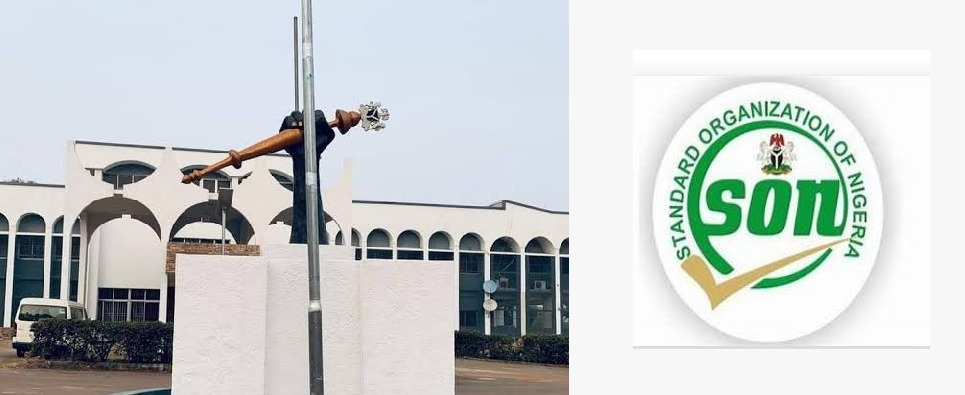
The development follows a motion moved at the Anambra State House of Assembly on October 27, by Hon. Ikenna Ofodeme, calling for stronger collaboration among regulatory agencies to tackle the circulation of fake products. The motion raised alarm over the use of harmful chemicals to preserve food, the use of calcium carbide to ripen fruits, the application of pesticides such as Sniper for grain preservation, and the circulation of substandard building materials linked to building collapses.
The motion further called for a joint effort involving the National Agency for Food and Drug Administration and Control (NAFDAC), SON, the Federal Competition and Consumer Protection Commission (FCCPC) and the Importers Association of Nigeria (IMAN) to strengthen enforcement and consumer protection.
In response to such concerns, SON under its Director-General, Dr. Ifeanyi Okeke, said it has introduced digital platforms, expanded certification coverage, strengthened laboratory services and developed new standards to protect consumers and promote quality production.
One of the major reforms is the introduction of the Digital Standards Platform (DSP), which consolidates Nigerian Industrial Standards, a directory of certified products, a register of verified manufacturers and conformity assessment services. The organisation also digitised the Mandatory Conformity Assessment Programme (MANCAP) for locally manufactured products to improve factory inspections, product sampling, certification tracking and compliance monitoring.
Similarly, the integration of the SON Conformity Assessment Programme (SONCAP) into the National Single Window is designed to tighten checks on imports before entry into the Nigerian market, particularly for electrical cables, tyres, spark plugs and electronic equipment. The reforms earned SON second place among federal agencies in the 2024 Presidential Enabling Business Environment Council (PEBEC) Transparency Report.
Under MANCAP, SON has certified 17,866 products manufactured by 8,634 companies as of October 2026, a sharp rise from 1,930 products recorded at inception in 2006. The programme involves factory inspection, product sampling, laboratory testing and market surveillance to ensure conformity with Nigerian Industrial Standards. In March 2025, SON also introduced a new MANCAP logo to make certified products easier to identify and harder to counterfeit.
The organisation has announced the deployment of Product Authentication Technology, including a Product Authentication Mark (PAM), to enable consumers to verify SON-certified products with mobile phones. Other initiatives such as the Electronic Product Identification Scheme (e-PIS), Product Identification Scheme (PIS), Special Economic Zone Conformity Assessment Programme (SEZCAP) and SON Export Conformity Assessment Programme (SONEXCAP) are aimed at improving traceability and conformity assessment.
On standards development, SON disclosed that the Nigerian National Standardisation Strategy 2024–2027 facilitated the approval of 217 new Nigerian Industrial Standards, including over 80 standards for Compressed Natural Gas (CNG) to support safety in the clean-energy sector, alongside measures for Liquefied Petroleum Gas (LPG) cylinder tracking and adoption of Codex standards for locally produced foods such as root and tuber flours.
In another major milestone, SON secured international recognition for Nigeria’s metrology system on October 14, 2026, following Nigeria’s admission as a full member of the International Bureau of Weights and Measures (BIPM) and the signing of the CIPM Mutual Recognition Arrangement in France. Three laboratories of the National Metrology Institute covering mass, temperature and pressure have also been accredited to ISO/IEC 17025:2017, boosting confidence in Nigeria’s testing and certification system.
For Anambra State, stakeholders say the Assembly’s motion provides an opportunity to strengthen enforcement through the establishment of a joint desk involving the Ministries of Health and Commerce and SON’s state office in Awka, to facilitate product certification, improve whistle-blowing mechanisms, raise public awareness on product authentication systems, and encourage traders to stock only products bearing appropriate SON marks, particularly in high-risk categories such as building materials, food products and electrical equipment.
Chinyere Nwoye is of the Ministry of Information and Value Reformation, Anambra State