By Obiageli Nwankwo
Every child deserves an opportunity to learn, grow and succeed, regardless of their abilities or learning challenges. This principle is at the heart of inclusive education, which seeks to ensure that no learner is excluded from quality education because of individual differences or special needs.
Anambra State’s education agenda recognises the importance of inclusive and special education, with emphasis on making learning accessible to children with diverse abilities and needs across the state.
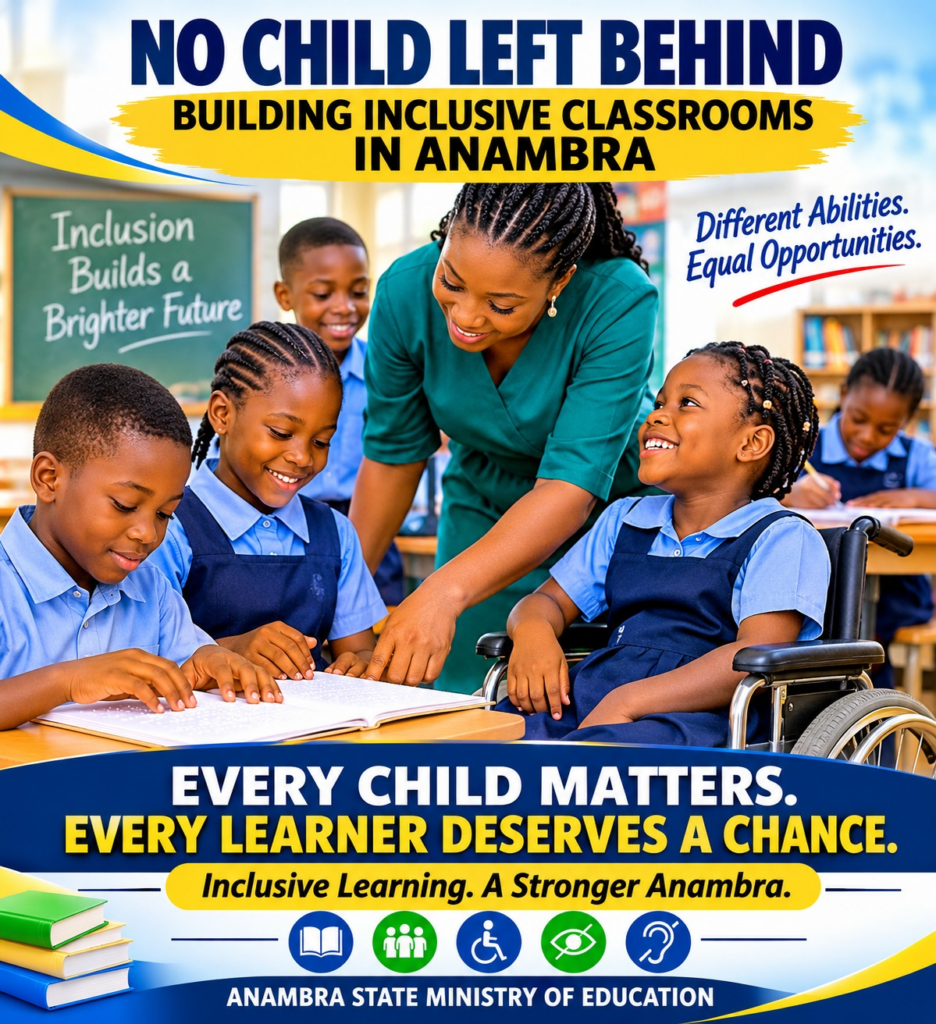
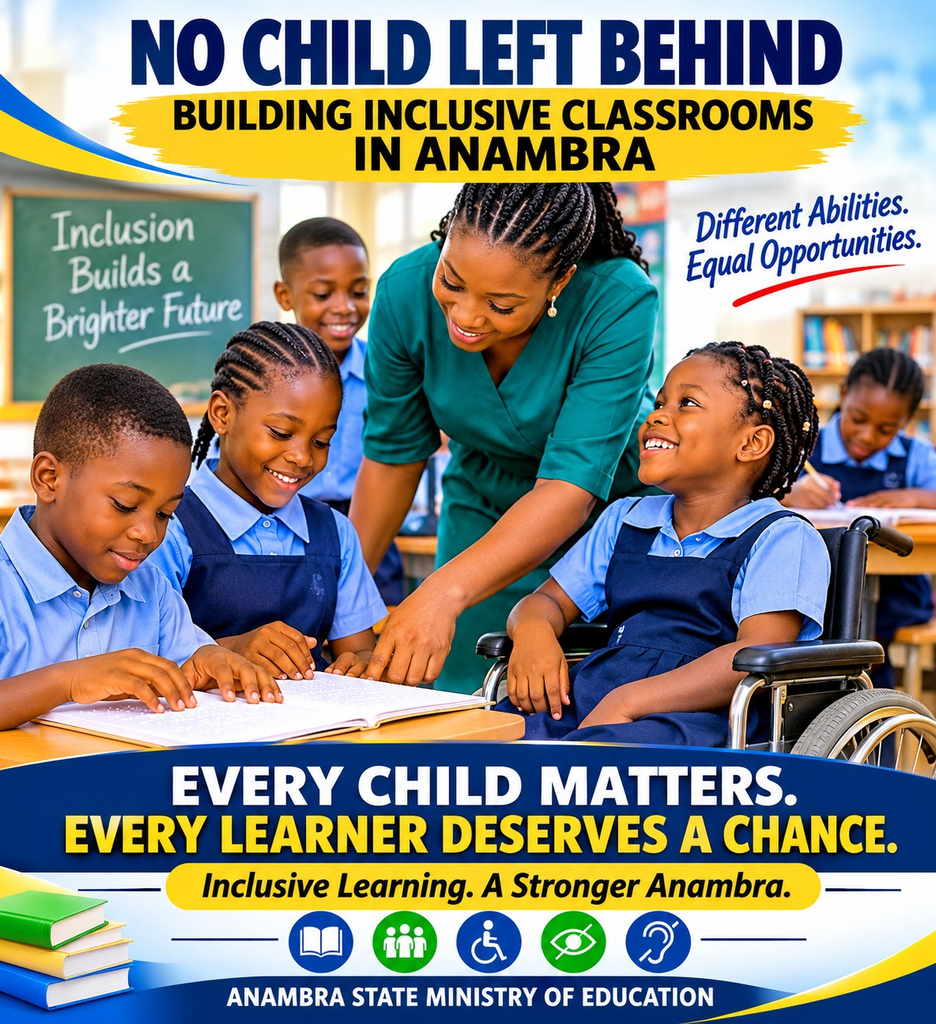
Inclusive education goes beyond bringing children together in the same classroom. It requires creating a supportive learning environment where every pupil can participate, access appropriate educational resources and achieve meaningful progress.
Some children may experience difficulties with reading, writing, concentration, communication, mobility, vision or hearing. Identifying these challenges early enables teachers to adopt appropriate teaching methods and provide the support each learner needs.
As part of efforts to remove barriers to learning, support for children with special needs includes assistive resources such as Braille materials, talking computers and wheelchairs. These tools can improve accessibility, encourage independence and enable more children to participate actively in classroom activities.
Teachers also have an important role in making inclusion work. Using pictures, demonstrations, guided reading, practical exercises, repetition and clear instructions can help pupils understand lessons at their own pace and in ways that suit their learning needs.
Beyond teaching methods, the attitude of educators matters. Children who experience learning difficulties should not be mocked, labelled or made to feel inadequate. Patience, encouragement and positive correction help build their confidence and create an environment where they feel safe to ask questions and participate.
Parents and schools must also work together to identify and address learning challenges. When a child consistently struggles with reading, communication or other aspects of learning, early engagement between parents and teachers can help determine the appropriate support and interventions.
While free education helps reduce financial barriers to schooling, inclusive teaching ensures that children are not left behind because of their individual circumstances. Both are essential to making educational opportunities meaningful for every learner.
Ultimately, inclusive education is not about lowering academic standards but removing barriers that prevent children from reaching their potential. By strengthening support for learners with diverse needs, Anambra can build a more equitable education system where every child has the opportunity to learn, develop and contribute meaningfully to society.
Obiageli Nwankwo is of the Ministry of Information and Value Reformation, Anambra State
#InclusiveEducation #EveryChildMatters #LeaveNoChildBehind2