By Amaka Isikala
The Anambra State Commissioner for Environment, Dr. Clem Aguiyi, has underscored the urgent need for increased investment in environmental protection, warning that the state continues to lose billions of naira annually to erosion and other environmental challenges.
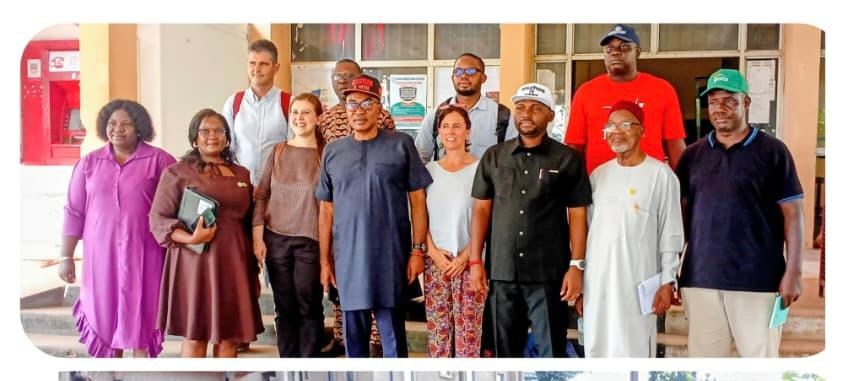
Dr. Aguiyi made the disclosure on June 16 when a delegation from Acciona Engineering Consultancy Spain, working on behalf of the African Development Bank (AfDB), paid him a courtesy visit in his office at the state’s Secretariat as part of efforts to conduct a rapid city diagnostic assessment of Awka and identify priority projects for future development financing.
The commissioner described erosion as one of the most critical environmental threats facing Anambra State, noting that the fragile nature of the state’s soil makes many communities vulnerable to gully erosion, resulting in the destruction of infrastructure, farmlands, homes and public investments.

According to him, environmental sustainability cannot be achieved through government action alone, stressing the need for a people-centred approach that promotes community ownership of environmental protection initiatives.
He disclosed plans to establish an Environmental Academy that would focus on practical environmental education, equipping citizens with the knowledge and skills needed to identify and address environmental challenges within their communities.
Dr. Aguiyi explained that the proposed academy would engage youths, traditional rulers, market leaders, women groups and other stakeholders, enabling them to become environmental champions and active participants in safeguarding the environment.
The commissioner advocated sustainable environmental financing, emphasizing that environmental degradation should be treated as an existential challenge requiring deliberate and adequate funding. He noted that prompt intervention in environmental emergencies would save the state enormous resources that could otherwise be invested in education, healthcare and social welfare programmes.
On waste management, Dr. Aguiyi described the current waste disposal system as inadequate, explaining that most waste is merely transported from one location to another without proper treatment or value recovery. He observed that plastic waste constitutes a major environmental challenge and called for the transformation of existing dumpsites into modern waste recovery and recycling centres.
He revealed that the state government is considering the establishment of integrated waste treatment facilities where recyclable materials can be processed while biodegradable waste is converted into organic compost and manure. According to him, the initiative would improve environmental sanitation, support a circular economy and create thousands of direct and indirect jobs.
Dr. Elisa Marceratini, a delegate, Head of the Sustainable Urban Development Unit, Acciona, commended the ministry’s commitment to environmental education, describing it as a critical foundation for behavioural change and long-term environmental sustainability.
She explained that the team’s mission is to develop a comprehensive environmental and climate change profile for Awka City that will guide the identification of priority projects and investment opportunities capable of attracting support from the African Development Bank.
Dr. Marceratini noted that field visits and stakeholder engagements had already identified erosion and waste management as major environmental concerns within the city.
She, however, stressed the need for additional information on issues such as flooding, pollution, biodiversity conservation, water quality and environmental governance.
Responding to questions on flooding, Dr. Aguiyi acknowledged that Awka experiences localized flooding but noted that the challenge is less severe than in riverine areas such as Ogbaru, Anambra West and Ayamelum Local Government Areas, adding that indiscriminate disposal of waste into drainage channels remains a major contributor to flooding and environmental degradation.
The delegation also sought information on ongoing and proposed environmental projects within Awka to help identify intervention gaps and avoid duplication of existing government programs, adding that a formal request for environmental data and project information would be forwarded to the ministry to support the city’s environmental and climate resilience assessment.
The meeting ended with both parties expressing optimism that stronger collaboration between the Anambra State Government, African Development Bank and other development partners would accelerate the implementation of transformative projects aimed at controlling erosion, improving waste management, strengthening climate resilience and promoting sustainable urban development in Awka.
Amaka Isikala is of the Ministry of Information and Value Reformation, Anambra State